Israel Election
Will the result be accepted?
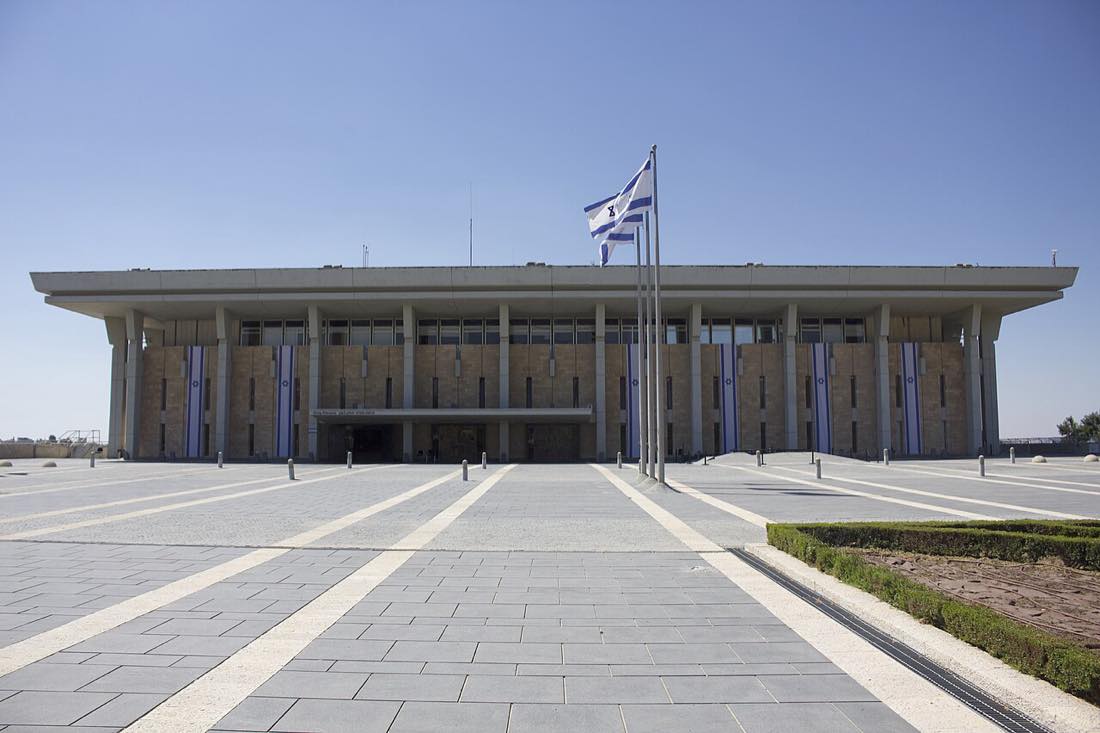

Israelis voted on Oct. 27 in the highest numbers since 1999. The Central Elections Committee certified the results on Nov. 4: no bloc has the 61 seats needed to govern. Netanyahu’s camp claims, without evidence, that Arab voters and the left stole the election, and on Nov. 25 Likud asked a court to void the vote at 120 polling stations (Jerusalem Post). This page tracks coalition-building and any fight over the result’s legitimacy, with only sourced developments.
The election committee certified the results on Nov. 4: Netanyahu’s bloc 53 seats, short of the 61 needed to govern; Eisenkot’s bloc 48; Arab-majority parties a record 19. Officials have found no evidence for Likud’s fraud claims; on Nov. 17 the committee said there was no evidence of bribery on a scale that could affect the result. Herzog gave Eisenkot the first chance to form a government; the Knesset elected his ally speaker, and he has signed deals with Liberman and Golan and is negotiating with United Torah Judaism. On Nov. 25 Likud appealed to the Jerusalem District Court to void the vote at 120 polling stations, a formal challenge to part of the count. Eisenkot’s mandate runs to Dec. 6.
What would change this rating ↓
israelelection.america2.newsGet America 2.0 in your inbox
Analysis of Russian influence, information warfare and the networks behind them. Free; unsubscribe anytime.
Will Netanyahu stay in power?
Our rating above asks whether the result is accepted. This panel looks at the question most readers are asking now. It lays out the evidence as of Nov. 28; it is not a rating.
Still in office, but his rival is closing in. President Isaac Herzog gave Gadi Eisenkot, not Netanyahu, the first chance to form a government on Nov. 7 (Axios). Eisenkot’s mandate runs to Dec. 6, with a possible two-week extension; he aims to swear in a government as early as Wednesday, Dec. 2 (Jerusalem Post). Netanyahu stays prime minister, as caretaker, until a new government is sworn in (CBS News).
Pointing toward his exit
- On Nov. 28 Netanyahu offered to go second in a rotation with Eisenkot in a unity government, saying that “given the magnitude of the existential threat” he would “put everything aside.” Eisenkot replied that his party’s negotiators had met “refusal and evasion” from Likud for weeks, and invited Netanyahu to serious talks on policy (Reuters). Netanyahu said the offer was meant to head off a “government of catastrophe” backed by Arab parties. It split his opponents: Bennett urged Eisenkot to negotiate, while Golan and Yair Lapid, Bennett’s co-founder, rejected it (New York Times).
- Ra’am’s leader, Mansour Abbas, said Nov. 28 that his party had backed a bill defining Hamas as a terrorist organization, an apparent step toward Eisenkot’s condition for Arab parties; it is unclear whether that satisfies him (New York Times).
- In Herzog’s consultations, 67 of 120 lawmakers recommended Eisenkot and 46 recommended Netanyahu (Axios).
- On Nov. 17 the new Knesset elected Eisenkot’s ally Matan Kahana speaker, 66 to 52, replacing Likud’s Amir Ohana (Times of Israel).
- Eisenkot has signed coalition deals with Avigdor Liberman’s Yisrael Beytenu and Yair Golan’s Democrats, and is negotiating draft and education terms with United Torah Judaism (Jerusalem Post).
- Officials have found no evidence for the fraud claims. On Nov. 17 the elections committee said “there is no evidence that bribes were paid to voters on a scale that could have affected the election results,” and the attorney general is examining reports that the bribery claims began with Netanyahu’s own staff (AP).
Pointing toward his staying
- Eisenkot’s four-party bloc holds 48 seats, and Naftali Bennett’s party (12 of them) has not yet signed. Reaching 61 depends on the ultra-Orthodox parties (13 seats) or the Arab-majority Ra’am, which has not signed; Eisenkot says whether the Arab parties support, abstain or stay away “is their business” (Jerusalem Post).
- Shas has not moved, and Netanyahu has asked UTJ not to rush a deal (Jerusalem Post).
- Likud’s court appeal seeks new votes at 120 polling stations. Even by Likud’s own math it would add one seat to Netanyahu’s bloc, leaving it seven short (Jerusalem Post).
- If no one reaches 61, Israel votes again, with Netanyahu as caretaker in the meantime.
Share-card photo: Benjamin Netanyahu at the Pentagon, Feb. 5, 2025. U.S. Department of Defense (public domain).

Latest reports
New reporting from major outlets and official sources, listed as it appears. Our monitoring adds headlines from major outlets automatically. "Checked" means our software fetched the full report and confirmed it supports its headline. "Reviewed" means an editor checked it against its source. "Auto" items have not been checked yet. Tap a label for our note. None of this is an endorsement. Our assessment is the rating above.
- Netanyahu appeals to rival for Israel unity government (https://aapnews.aap.com.au/)
auto ▾
Not checked yet. Listed automatically because it comes from a major outlet or official source. - Netanyahu offers to step down, letting Eisenkot lead Israel first (Global News)
reviewed ▾
An editor checked this report against its source. (2026-11-28) - Netanyahu offers to rotate Israeli premiership with Gadi Eisenkot (Al Jazeera)
reviewed ▾
An editor checked this report against its source. (2026-11-28) - Netanyahu proposes Israeli unity government where rival Eisenkot becomes PM first (BBC)
reviewed ▾
An editor checked this report against its source. (2026-11-28) - Netanyahu offers to rotate Israeli premiership with main rival Eisenkot (The Guardian)
reviewed ▾
An editor checked this report against its source. (2026-11-28) - At risk of losing power, Netanyahu makes unity appeal to rival Eisenkot (Reuters)
reviewed ▾
An editor checked this report against its source. (2026-11-28) - Netanyahu and Eisenkot agree to meet for coalition talks on Sunday (Euronews.com)
auto ▾
Not checked yet. Listed automatically because it comes from a major outlet or official source. - Eisenkot Edging Closer to Leading Israel With Talks Progressing (Bloomberg.com)
reviewed ▾
An editor checked this report against its source. (2026-11-28) - Israel’s Eisenkot accuses Netanyahu’s party of stalling coalition talks (Al Jazeera)
reviewed ▾
An editor checked this report against its source. (2026-11-28) - Israel's Eisenkot resumes meetings with left-wing faction as coalition talks gain steam (Reuters)
reviewed ▾
An editor checked this report against its source. (2026-11-26)
What would change this assessment
The rating moves on official acts and on-the-record statements: Central Elections Committee results, court filings, the president’s decisions, party leaders’ own words. Exit polls and anonymous briefings don’t move it on their own.
- partly seenWould move up: Netanyahu or a Likud minister, on the record, refuses to accept the certified count or calls it fraudulent.
- seenWould move up: a formal petition to the Central Elections Committee or the courts to void Arab-sector ballots or disqualify an Arab party’s seats. On Nov. 25 Likud asked the Jerusalem District Court to void the results at 120 polling stations, mostly in Arab communities (i24NEWS). The elections committee told the court Likud’s main claim “does not establish grounds” to disqualify ballot boxes (Times of Israel).
- not seenWould move up: the caretaker government uses emergency powers, or restarts the war with Iran, in a way that delays the mandate or the new Knesset’s swearing-in.
- not seenWould move up: mass protests or violence tied to the result.
- not seenWould move up: a foreign government (including the United States) rejects or conditions the result, or Israeli authorities attribute an influence operation targeting the count.
- not seenWould move down: official final results go unchallenged, the losing side concedes, or a coalition is signed within the normal window.
What is actually known
- Likud filed fraud claims against Arab polling stations. On October 28 Likud, in a statement Netanyahu posted on X, said the election was “stolen” by “Arab parties that support terror” through bribery, threats, violence, forgery and “the use of illegal software to mobilize voters,” and said it had given police, the Shin Bet and the Central Elections Committee “hundreds of testimonies” (Netanyahu on X; translation: Times of Israel). The committee said it received the request and is reviewing it under the integrity process it runs in every election, which it opened to all lists on October 25 (Times of Israel). Police said neither investigative findings nor intelligence support the allegations; they had received 48 fraud and impersonation complaints, about 40% fewer than in the previous election (i24NEWS). On Oct. 29 it emerged that the committee’s chairman, Supreme Court Justice Noam Sohlberg, had asked the Shin Bet in a letter dated Oct. 28 to investigate “serious suspicions” of improper influence through “funding provided by foreign entities acting against Israeli interests,” writing that he “cannot attest to the substance of these suspicions.” He asked for findings within a week. On Nov. 1 Sohlberg, flanked by the Shin Bet chief and the attorney general, said in a video that the elections “were conducted properly” and that “even if the suspicions are ultimately confirmed, this would not call into question the integrity of the electoral process or the overall results.” Likud answered that “until the investigation is concluded, a dark cloud hangs over the election results” (France 24). The suspicions do not appear to concern irregularities in the voting or the count (Times of Israel). The Shin Bet said its investigation “does not cast aspersions or accuse an entire sector that went out to vote in a democratic and lawful manner,” and Qatar denied any role (WSJ). The committee’s acting general manager, Dean Livneh, wrote to the Knesset that “to the best of our knowledge, there is no basis for claims of systematic violation of the purity of the elections” (Washington Post).
- Count complete, no majority. On Oct. 29 the Central Elections Committee said the count was complete: with 99% of votes entered, Netanyahu’s bloc holds 53 seats and the opposition parties 67, including a record 19 for Arab parties, up from 10 in the outgoing Knesset (Haaretz, Al Jazeera). Likud leads with 27 seats to Yashar’s 21 (Haaretz). A government needs 61 of 120 (FT). The committee says it will publish the official results on Wednesday, Nov. 4, after an additional review of election integrity (Haaretz). President Isaac Herzog, who decides which candidate gets the first chance to form a government, said “we must do everything we can… to avoid another round of elections” (AFP).
- Highest turnout since 1999. 77.7% (5,695,682 voters) had voted by the 10 p.m. close, the highest at that hour since 1999, per the Central Elections Committee (BBC). At 8 p.m. it was 74.3%, eight points above the same hour in 2022 (Ynetnews).
- Arab parties surge. Ra’am and the Joint List are projected at 18–19 seats combined, up from 10. Both blocs’ leaders have ruled out Arab parties in a government, which leaves neither side an obvious path to 61 (Jerusalem Post).
- The fraud narrative came before the count. On election day Netanyahu and other Likud figures said, without evidence, that the election was being stolen (Times of Israel). Haaretz and Channel 12, citing Likud sources, reported discussions of a “the elections were stolen and rigged” campaign if he loses, aimed at Arab-sector polling stations. The committee’s director general, Dean Livne, said there is no evidence of widespread fraud and the safeguards are sufficient (Times of Israel). On Wednesday, with most votes counted, Likud accused Arab parties of “stealing” the election, again without providing evidence (FT).
- Netanyahu framed his majority as Jewish. He said the right has “a clear, decisive majority among the Zionist public” and that it is unthinkable “to set up a government that relies upon anti-Zionist Arab parties,” adding that “we are still waiting for the true results” (Times of Israel). Foreign Minister Gideon Sa’ar hailed a “clear Jewish majority” (Haaretz).
- A Likud minister warned against an Arab-backed government. Culture and Sports Minister Miki Zohar said any leader who tries to form a coalition with the help of Palestinian-Israeli parties will “end their political careers” (Al Jazeera). Eisenkot declared victory in a statement, saying the preliminary results should give him the first chance to form a government (Jerusalem Post).
- Police arrested Ra’am activists at their homes hours before polls opened. Ra’am called the arrests baseless and an effort to suppress Arab turnout through National Security Minister Itamar Ben-Gvir’s control of the police (Jerusalem Post).
- Trump endorsed Netanyahu twice, on Oct. 18 and Oct. 25: “Vote for Bibi Netanyahu for Prime Minister, we have to finish the job that we started!” Netanyahu suggested the two could restart the war on Iran if he wins (Reuters). On October 28 Trump told Axios, “I heard my endorsement made a big difference for Bibi,” and said he had not thought about trying to broker a unity government (Axios). The Financial Times reports, citing people briefed on the matter, that before the vote Netanyahu told the military to prepare a multi-day bombing campaign against Iran for the weekend of Oct. 10; it did not go ahead because Trump did not approve it. Israeli security experts told the FT nothing would stop him, as caretaker prime minister, from reviving the plan after the U.S. midterms. Eisenkot said on election night that Netanyahu had no “mandate or the people’s trust” to start any military adventure (FT).
- Foreign interference warnings. Shin Bet chief David Zini warned of interference by Russia, China and Iran (Jerusalem Post). FakeReporter, an Israeli group that tracks fake accounts, says Iranian networks are behind most of the influence campaigns it has seen in Israel, some from Russia (Al-Monitor).
Claims in circulation
The most-shared claims, and what public sources can confirm.
DisputedNetanyahu’s bloc is on 60 seats.
Channel 14 exit poll; other broadcasters show 50 (NBC News)
UnconfirmedEisenkot has won the election.
Eisenkot’s election-night statement declaring victory (Jerusalem Post)
No evidenceArab voters and the left are stealing the election.
Netanyahu and Likud figures, election day (Times of Israel)
No evidenceVoters in face coverings at Arab-sector polling stations enable fraud.
Anonymous Likud source to Haaretz (Times of Israel)
What to watch next
- Nov. 29: Eisenkot and Netanyahu’s first known formal meeting since the election, on Netanyahu’s offer to go second in a rotation (New York Times).
- Dec. 2: Eisenkot’s target for a Knesset confidence vote and swearing-in. Dec. 6: his mandate expires unless Herzog grants up to 14 more days (Jerusalem Post). If he fails, a second nominee gets 28 days with no extension, and a new election follows if no one succeeds (Israel Democracy Institute).
- Whether United Torah Judaism, Shas or Ra’am signs, and whether Naftali Bennett’s party, which postponed talks, joins.
- The Jerusalem District Court’s handling of Likud’s appeal. The appeal does not halt the Knesset’s work (Jerusalem Post).
- Whether Netanyahu or Likud ministers, on the record, accept a new government, and how a transfer of power proceeds.
- The attorney general’s review of where the bribery claims began, and the Shin Bet’s separate inquiry into foreign funding (AP).
- Statements from Washington, and any resumption of the Iran war while a caretaker government is in power (AP).
We had planned to close this tracker once results were certified and a nominee named, if no party had formally challenged the count. Likud’s Nov. 25 appeal is such a challenge, so the tracker stays open.
Timeline
- Oct. 18Trump endorses Netanyahu (Reuters).
- Oct. 25Trump endorses him again: “we have to finish the job that we started!” (Reuters).
- Oct. 27Morning: Haaretz and Channel 12 report Likud discussed a “stolen” campaign if Netanyahu loses (Times of Israel). Police arrest Ra’am activists before polls open (Jerusalem Post).
- Oct. 27Afternoon: Eisenkot’s Yashar party accuses Netanyahu of laying the groundwork to challenge the results (Times of Israel).
- Oct. 2710 p.m.: polls close on the highest turnout since 1999; exit polls show no bloc at 61 (NBC News).
- Oct. 27Night: Eisenkot declares victory (Jerusalem Post); Likud minister Miki Zohar says a leader who relies on Palestinian-Israeli parties will “end their political careers” (Al Jazeera). Updated exit polls swing toward Netanyahu; he claims a majority “among the Zionist public” (Times of Israel).
- Oct. 28Morning: with 57.3% of votes counted, Netanyahu’s bloc leads 55 seats to 49, short of 61 (DW).
- Oct. 28Afternoon: Likud says the election was “stolen” by Arab parties and submits complaints to police, the Shin Bet and the election committee, which says it is reviewing them; police say no evidence supports the claims (Times of Israel, i24NEWS).
- Oct. 289 p.m.: with nearly 90% counted, the committee count still has no bloc at 61 (53–48, Arab parties 19); more than 500,000 special ballots remain (Al Jazeera).
- Oct. 29The Central Elections Committee says the count is complete: Netanyahu’s bloc 53 seats, the opposition 67 (including Arab parties at 19); official results due Nov. 4 after an integrity review (Haaretz).
- Nov. 3All party leaders in Eisenkot’s bloc (48 seats) have endorsed him for prime minister. Netanyahu, whose camp holds 53, says voters chose him and calls for a “broad national government” without the Arab-majority lists (19 seats), which have hinted they may back Eisenkot. Herzog begins consultations Wednesday and has until Nov. 11 to pick a candidate (France 24).
- Nov. 3Trump says the U.S. will stop its roughly $3.8 billion in annual military aid to Israel by the end of the year, under an agreement he says he and Netanyahu reached months ago. The 10-year aid deal runs through 2028, and Congress may need to weigh in (Politico).
- Nov. 4The Central Elections Committee certifies the results; Herzog accepts them as legally binding and begins consultations (AP).
- Nov. 7Herzog chooses Eisenkot to form a government; 67 lawmakers recommended him, 46 Netanyahu (Axios).
- Nov. 17The elections committee finds no evidence of bribery on a scale that could affect the result (AP). The Knesset elects Matan Kahana speaker, 66–52 (Times of Israel).
- Nov. 25Likud appeals to the Jerusalem District Court to void the vote at 120 polling stations (Jerusalem Post).
- Nov. 24–26Eisenkot signs coalition deals with Liberman’s Yisrael Beytenu and Golan’s Democrats (Jerusalem Post).
- Nov. 28Netanyahu offers to go second in a rotation with Eisenkot in a unity government; Eisenkot invites him to policy talks (Reuters).
Key sources
- NBC News live blog, Oct. 27
- Times of Israel: Likud said already preparing to allege election was ‘stolen’
- Jerusalem Post: Arab parties projected at 17–19 seats
- Ynetnews: what happens after polls close
- Reuters: Netanyahu touts Trump endorsement